The Happiness Hypothesis

By Jonathan Haidt

Now with a new preface, this twentieth-anniversary edition returns to ten great ideas about flourishing—and why ancient wisdom matters even more in a digital age. Haidt connects this first book to the work that followed, including The Anxious Generation and the fight to reclaim a more human life beyond the phone-based childhood.

This is a book about ten Great Ideas. Each chapter is an attempt to savor one idea that has been discovered by several of the world’s civilizations — to question it in light of what we now know from scientific research, and to extract from it the lessons that still apply to our modern lives. It is a book about how to construct a life of virtue, happiness, fulfillment, and meaning.
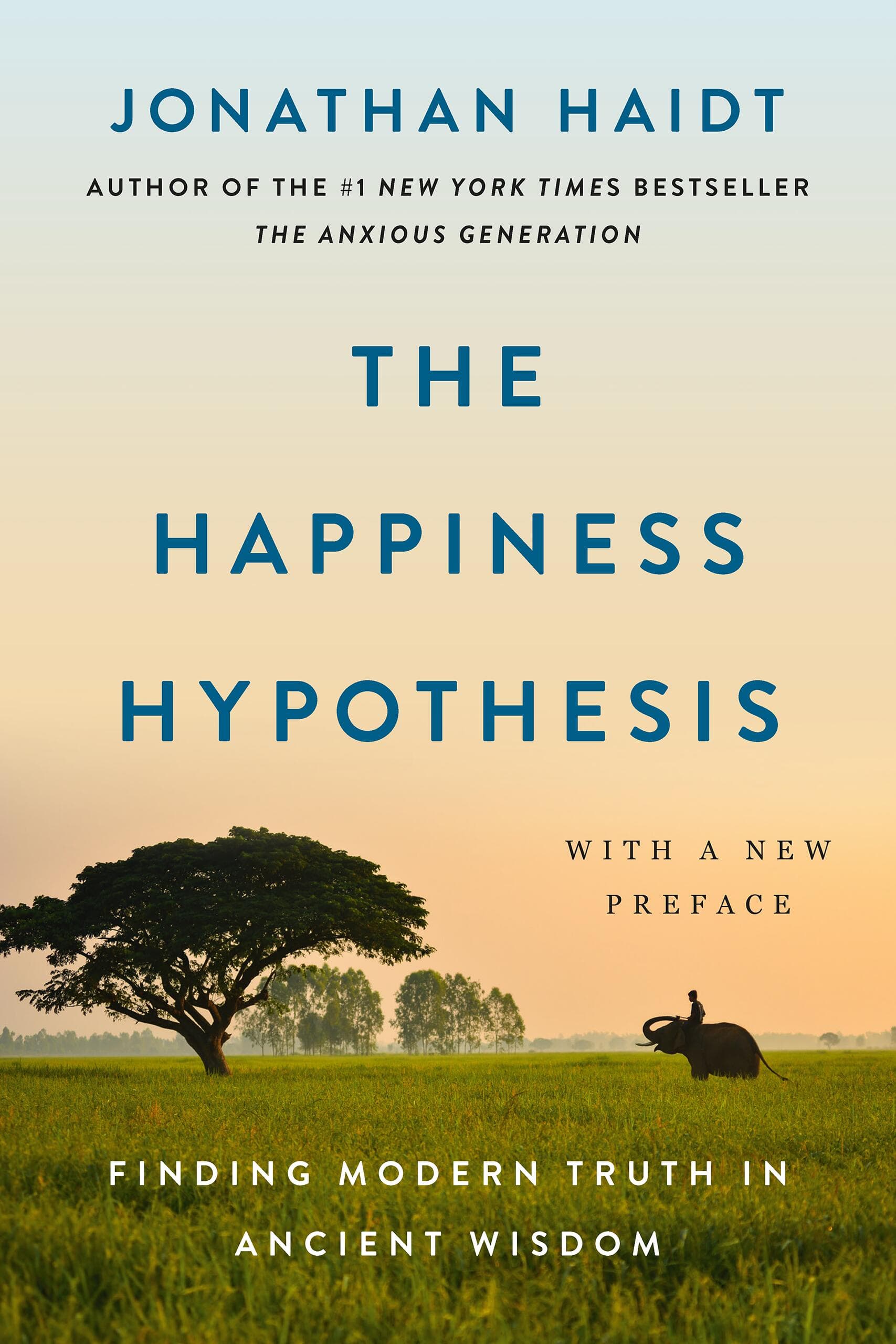
The Happiness Hypothesis book cover — twentieth-anniversary edition with a new preface

What people are saying:

  • “Riveting... the most humane, witty and comforting of these three books, brilliantly synthesising ancient cultural insights with modern psychology, and even holding out some faint hope that your happiness, if not your tallness, might be marginally adjustable after all.”

    — The Times
  • “A marvellous book... I don't think I've ever read a book that laid out the contemporary understanding of the human condition with such simple clarity and sense.”

    — The Guardian
  • “This is by some margin the most intellectually substantial book to arise from the 'positive psychology' movement.”

    — Nature
  • “This review has provided a small taste that I hope serves as an appetizer. My recommendation to readers: Dig in and enjoy the feast.”

    — Philadelphia Inquirer
  • “The Happiness Hypothesis is a wonderful and nuanced book that provides deep insight into the some of the most important questions in life—Why are we here? What kind of life should we lead? What paths lead to happiness? From the ancient philosophers to cutting edge scientists, Haidt weaves a tapestry of the best and the brightest. His highly original work on elevation and awe—two long-neglected emotions—adds a new weave to that tapestry. A truly inspiring book.”

    — David M. Buss, author of The Evolution of Desire: Strategies of Human Mating
  • “In our quest for happiness, we must find a balance between modern science and ancient wisdom, between East and West, and between ‘left brain’ and ‘right brain.’ Jon Haidt has struck that balance perfectly, and in doing so has given us the most brilliant and lucid analysis of virtue and well-being in the entire literature of positive psychology. For the reader who seeks to understand happiness, my advice is: Begin with Haidt.”

    — Martin E. P. Seligman, Director, Positive Psychology Center at the University of Pennsylvania and author of Authentic Happiness
  • “It would be something of an exaggeration to say that Jonathan Haidt has found the final answer to happiness, but he has come as close as any other writer of our times. Every page of his book provides gems of insight about the good life and where to look for it. Anyone who is interested in human nature and its potential must read this book.”

    — William Damon, Director, Stanford Center on Adolescence and author of The Moral Child
  • “Jonathan Haidt leaves no doubt about the importance of emotion in the creation of personal meaning. This is a delightful and courageous book.”

    — Antonio Damasio, author of Looking for Spinoza
  • “Should we live our lives by age-old wisdom or the latest discoveries? Haidt gives us the luxury of not having to choose, bringing together both sources of insight in this sparkling investigation into the psychology of life and happiness.”

    — Daniel Wegner, author of The Illusion of Conscious Will
  • “This fresh and original book goes to the heart of what people have found out about happiness, across cultures and times. Enjoyable, important, and eminently readable.”

    — Mihaly Csikszentmihalyi, author of FLOW
  • “An intellectual tour de force that weaves into one fabric wisdom that is ancient and modern, religious and scientific, Eastern and Western, liberal and conservative—all with the aim of pointing us to a more meaningful, moral, and satisfying life.”

    — David G. Myers, Professor of Psychology, Hope College, author of Intuition: Its Powers and Perils
  • “In this beautifully written book, Jonathan Haidt shows us the deep connection that exists between cutting-edge psychological research and the wisdom of the ancients. It is inspiring to see how much modern psychology informs life's most central and persistent questions”

    — Barry Schwartz, author of The Paradox of Choice: Why More Is Less