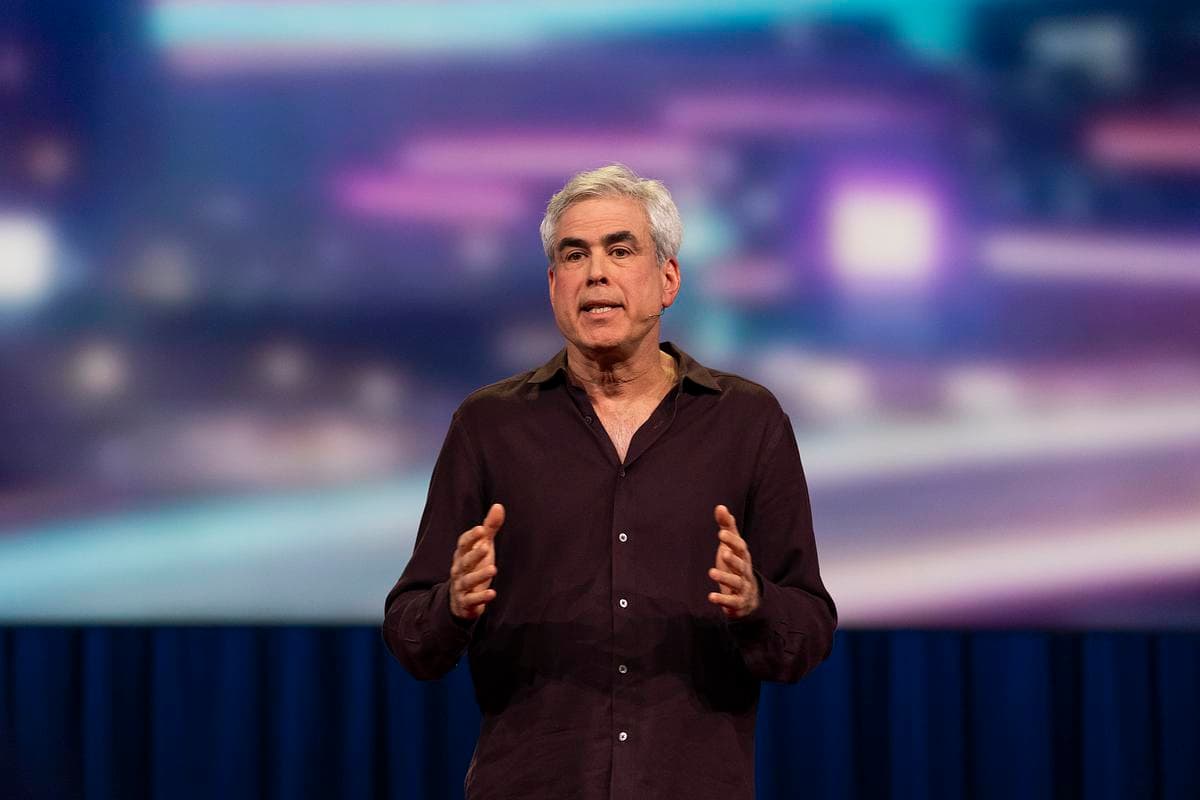
Jonathan Haidt (pronounced “height”) is a social psychologist at New York University’s Stern School of Business and the New York Times bestselling author of The Anxious Generation.
Haidt’s mission has long been to help people understand and learn from each other despite their moral differences. In 2018, he set out to write a book on how social media was changing society, particularly how it was degrading democracy and our ability to function together. He intended to focus one chapter on children, but as he dug into the data, he discovered the profound effects on youth mental health – and that chapter became an entire book, the #1 New York Times bestseller, The Anxious Generation: How the Great Rewiring of Childhood is Causing an Epidemic of Mental Illness (2024).
In The Anxious Generation Haidt brings to light the “great rewiring of childhood” in which play-based childhood has been replaced by phone-based childhood. The Anxious Generation was named a book of the year by The New York Times, The Wall Street Journal, Town & Country, Bill Gates, Barnes & Noble, and Goodreads. In 2025, Haidt co-authored The Amazing Generation: Your Guide to Fun and Freedom in a Screen-Filled World with Catherine Price.
Haidt continues this work, turning shared concerns about young mental health into concrete action and narrative change, through his fiscally sponsored 501(c)3 nonprofit organization, The TAG Movement. Through coordinated action across research, policy, behavior, and culture, TAG brings together parents, educators, policymakers, and young people to dismantle the tech-based childhood and restore healthy development grounded in play, independence, and real-world connection.
Haidt’s earlier research examined the intuitive foundations of morality, and how morality varies across cultures – including the cultures of progressive, conservatives, and libertarians. He co-founded a variety of organizations and collaborations that apply developmental, moral, and social psychology toward that end, including HeterodoxAcademy.org and The Constructive Dialogue Institute. He is also the co-founder of LetGrow.org, a non-profit promoting childhood independence and resilience.
Haidt is the author of The Happiness Hypothesis: Finding Modern Truth in Ancient Wisdom (2006), and of The New York Times bestsellers The Righteous Mind: Why Good People are Divided by Politics and Religion (2012), and The Coddling of the American Mind: How Good Intentions and Bad Ideas are Setting Up a Generation for Failure (2018, with Greg Lukianoff). He is also the founder of the After Babel Substack.
Haidt received his Ph.D. from the University of Pennsylvania in 1992, and taught for 16 years in the department of psychology at the University of Virginia. He has written more than 100 academic articles, which have been cited over 100,000 times. In 2019 he was inducted into the American Academy of Arts and Sciences. He has given four TED talks and been named a TIME100 Health leader.